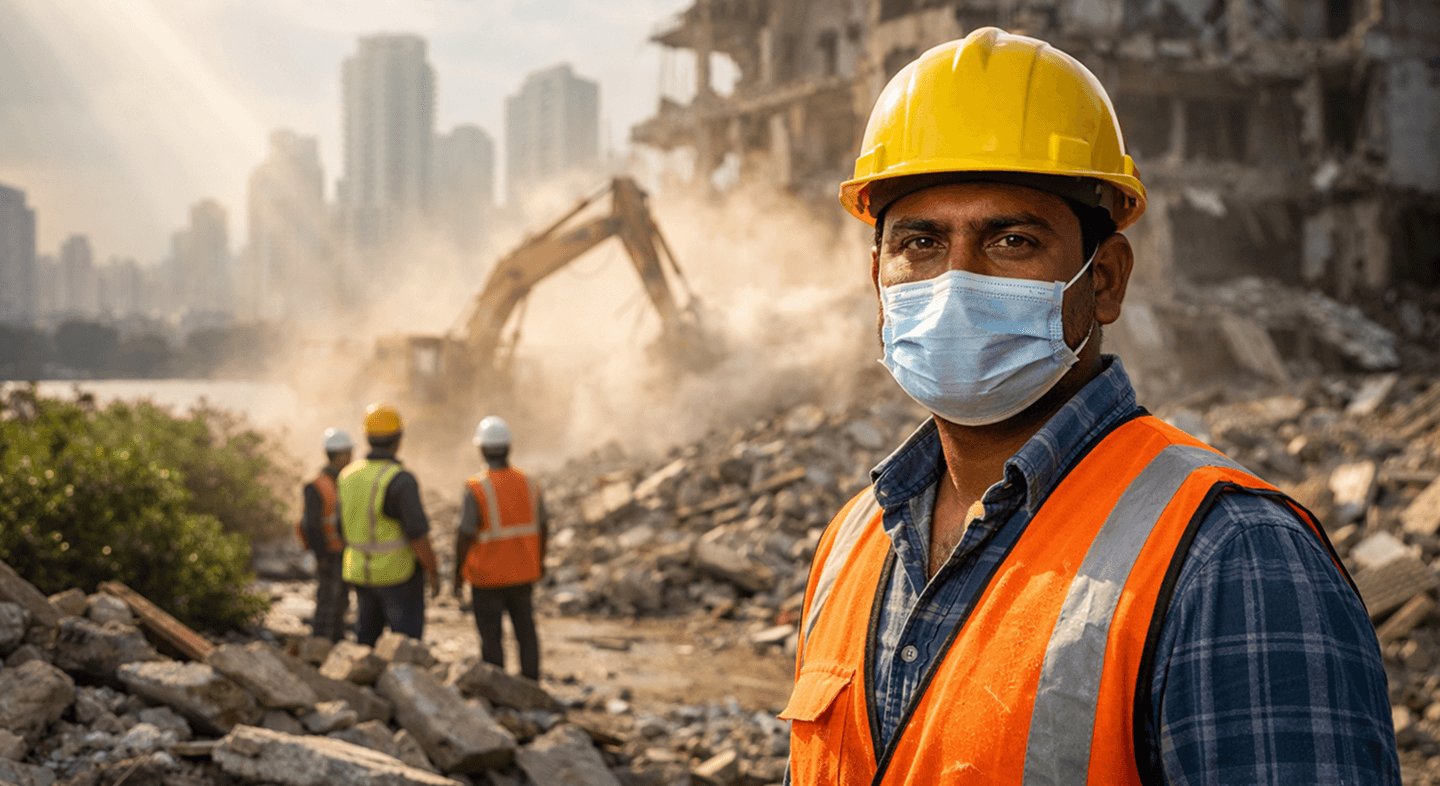
Any clue where all the construction & demolition waste goes? Contractor bhai does his job across different sites in Mumbai & with the demand for housing & redevelopment in Mumbai has ample of jobs yet to be done. But is there any place left in Mumbai or suburbs to take this debris burden. Well, the existing scenario…less said the better! The challenge lies for all: builders, developers, contractors, environmentalists & citizens. Encroaching mangrove patches with debris is like inviting the tsunami catastrophes inside your homes. Till every developer, builder, contractor & citizen comprehend the fact that Mangroves are not just plants but warriors of Mumbai shoreline, protecting us from natural disasters. It’s high time we resolved this scenario on ground or else the health hazards & environmental impacts shall provide no space for citizen survival in this densely populated urban infrastructure. The resolve needs to take into account the policy framework gaps addressing the attention of every professional associated with constructing & developing this maximum city. This blog is an humble attempt to the same.
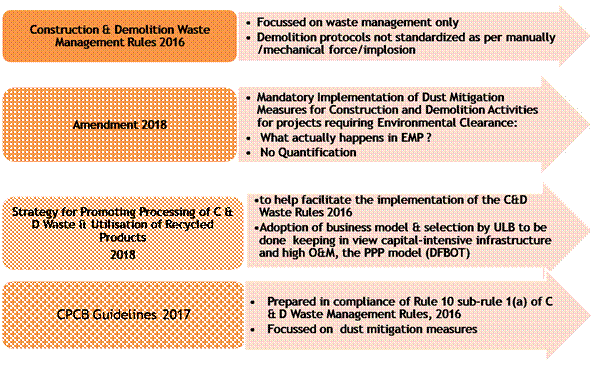
The illustration below gives an overview of the existing policy framework.
In addition to the above, we also had flutters of Supreme Court orders from September 2015 till March 2018, bringing in restraints of construction & demolition waste disposal on & off. To make implementation a reality on ground we need to work on the gaps in the existing framework. We need mandatory & standardized protocols based on the different activities involved in demolitions. For example a standardized protocol for conducting manual demolition similarly standardized / licensed / certified protocols for using mechanically powered equipments. Even highly stringent protocols need to be in place when implosions are conducted using explosives. To ensure the implementation of this & to comprehend the hazards of the same a licensed/ certified technical handholding is required onsite like a knowledge partner to the contractor & labour engrossed in job.
To develop a good practice prior to awarding the job, Govt. agencies can make the efficiency of mitigation measures taken a high priority while inviting bids. In the present scenario, bids for demolition are based only on what contractors would pay for recoverable.
Today, construction & demolition waste management plan is a procedural task in obtaining an environment clearance for any project proponent. But over the years, it has remained a subjective description template irrespective of the project type. This needs quantification of waste according to the project type. Taking an example, of demolition in SRA Scheme would have a different waste composition with more emphasis on quantity of asbestos sheets, unlike a residential redevelopment project.
The dashboard of the MCGM webpage for application to ‘debris on call’ service has the provision for quantification of debris components. Another simple provision could be made to application, with the details of the efficiency of mitigation measures taken during demolition.
In Norway, Bergsdal, Bohne had reported that demolition was the smallest from C & D activities, contributing only 8% in 1998 while construction and renovation contributed 52% and 40% respectively to waste generation. Learning’s from such developed countries can scaffold while developing our own climate responsive disposal plan.
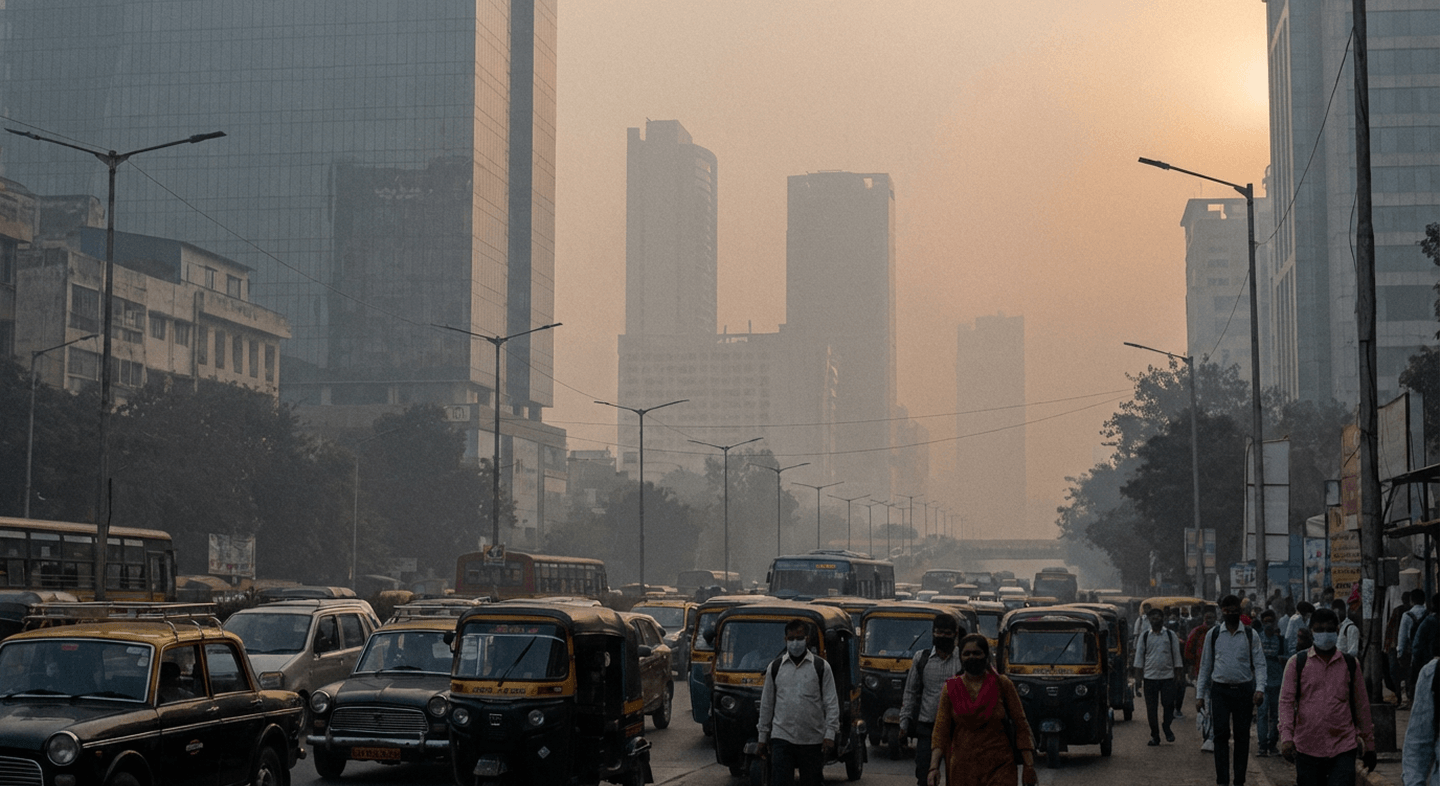
Taking a step to mitigate health hazards due to air pollution caused in demolition activities, potential alternatives for debris transportation routes could be done aligned with traffic & air quality of the area.
Considering the environmental sensitivity area specific we could not have one policy for all method. For example addressing air regulation through fair regulation would mean to allow certain stages of C & D activities in a certain seasonal variation of Mumbai & not in the winter variation of Delhi. I have quickly sketched an illustration to depict the same.
To overcome these gaps with alternatives, scientists have estimated useful numbers that can help make decisions. Adjunct to that we could have comparative studies on ground for statistical evidence & implementation of potential alternatives.
Until then the challenge of debris in air prevails!