The Mumbai metropolis discharges 365 million metric tonnes of raw sewage into the sea each year, to the detriment of its marine life. Fisherman now have to travel 8 hours or more off the coast to fill their nets.
“The conveniency of an individual must give way to public good.” It is a lesson Bombay is still struggling to grasp.
We thrive in a town whose surface & society had been filtered together like a jigsaw puzzle.
MUMBAI’S ENVIORNMENT CAMPAIGN
“Mumbai”
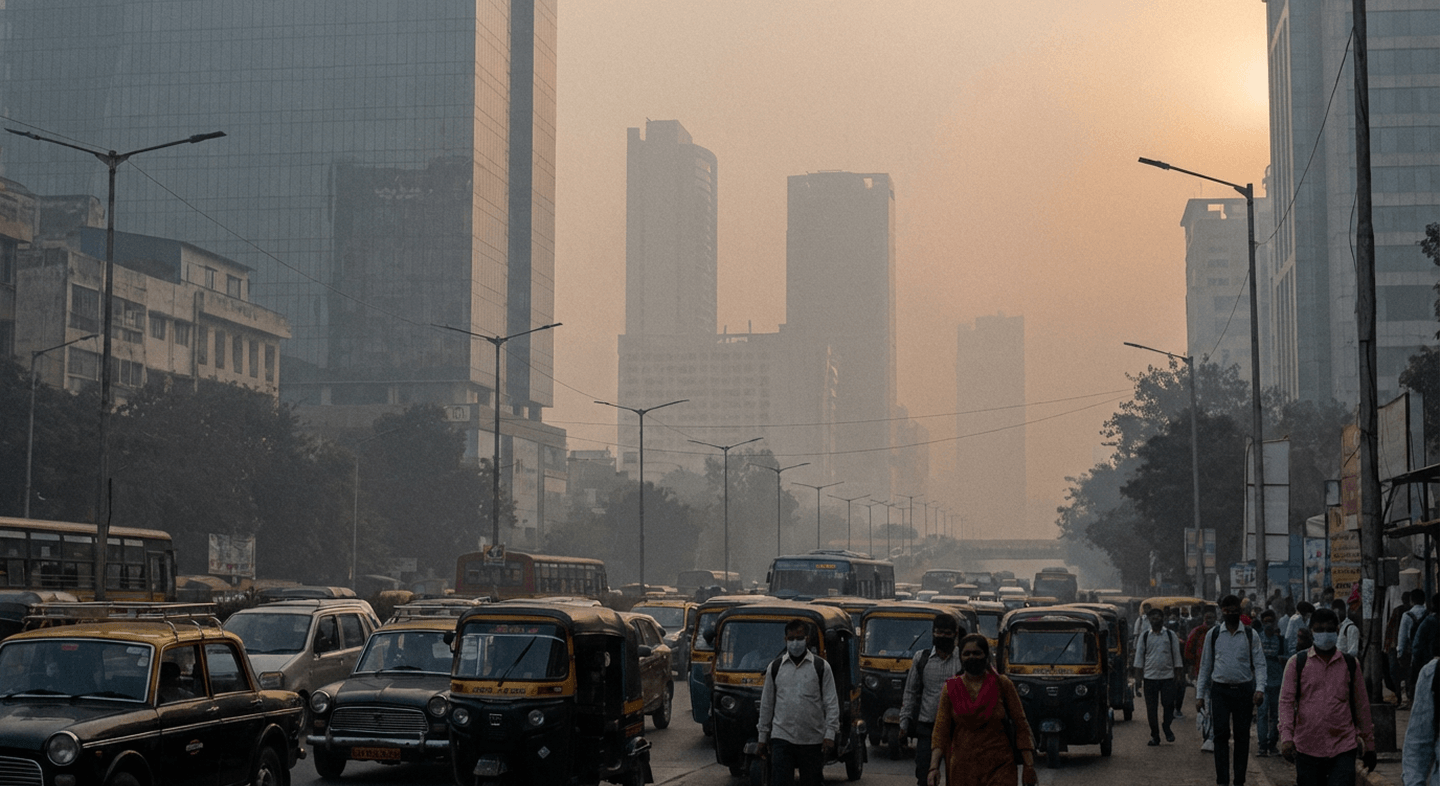
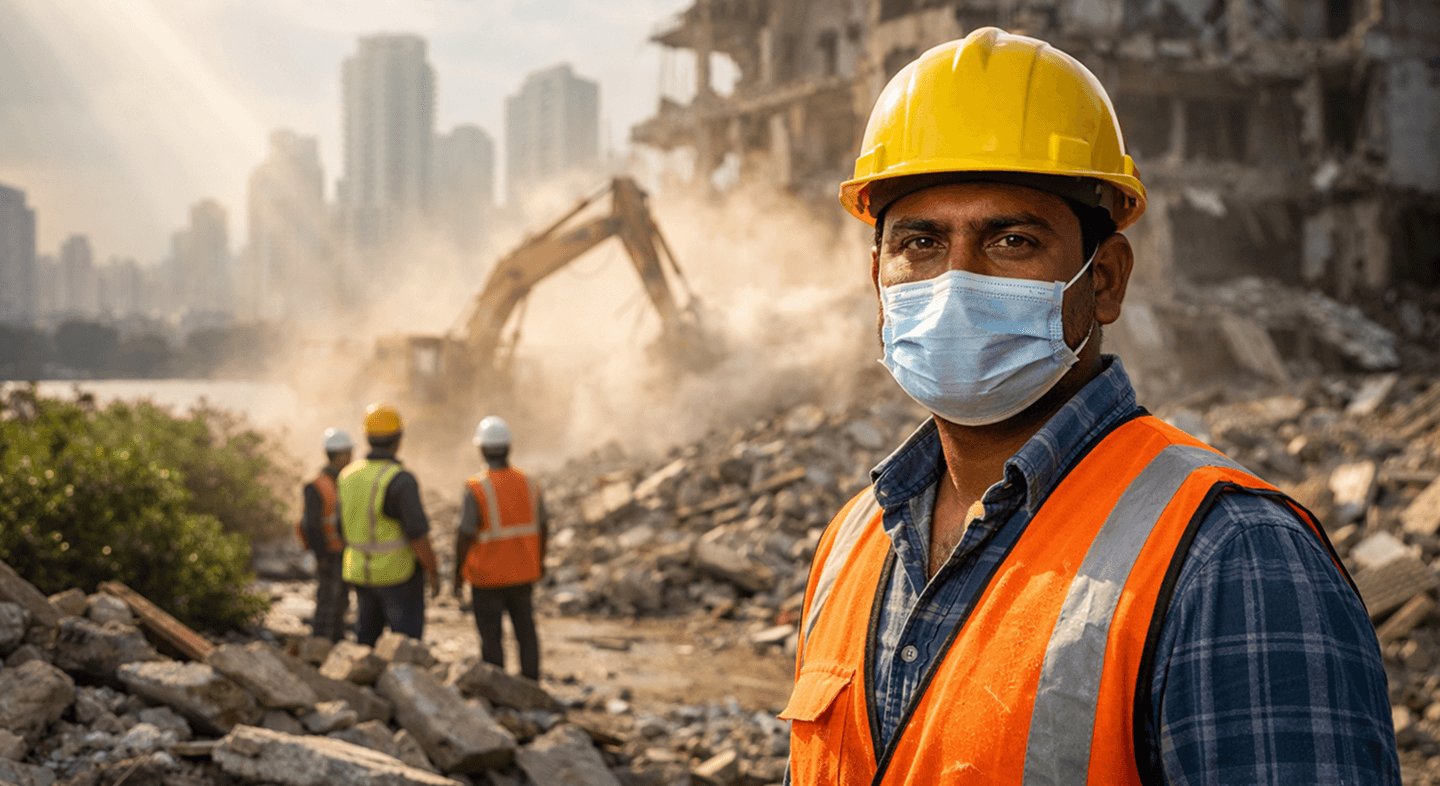
*Bombay is reeling under an explosion of pollution, crowds & noise.
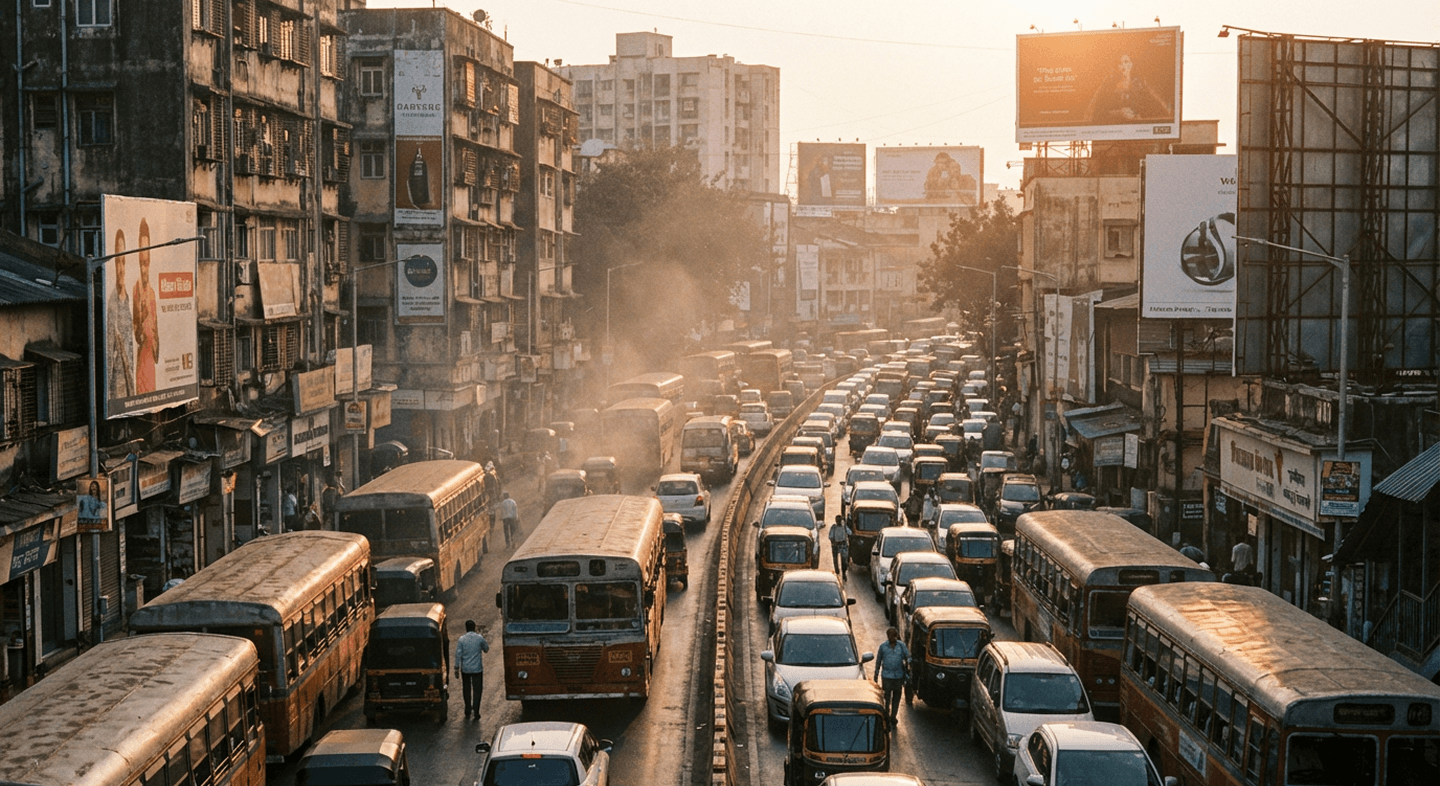
*Urban landscape of Mumbai it’s ever-increasing vehicular & population growth is a nightmare for everybody & the nightmare will only worsen every year.
*Though Mumbai has always been in a state of changes the detritus of 2 millennia is just a train ride away.
*Where Bombay once had to quarry hills to expand, it is currently rising on it’s own waste.
*BKC isn’t the only reclamation project undertaken city. A study conducted by Mumbai University’s geography department in 2012 used satellite imagery & remote sensing technologies to defect 54.7 sq. kms of land has been created since 1990. The images showed substantial reclamation near Bhandup & around Manori Creek, while mudflats in Gorai & Mahul have been built over.
*MOST OF THIS NEW LAND IS IN THE INTERTIDAL ZONE, WHICH IS CLASSIFIED AS BEING ECOLOGICALLY SENSITIVE.
*Reclamation have stripped the city of 40% of its mangrove cover in the decade since 1995, depriving Bombay cities of a natural flood barrier & still trap.
*Every rains, or man-made attack spawns a myth: that of the ‘spirit f Bombay.’ The city’s alacrity in getting back to work the day after the attacks led to the suggestions that the metropolis was infinitely resilent, that it could pick itself up & march back into trains after any tragedy, no matter how cataclysnnic.
*Mumbai’s indomitable will has been nailed by its politicians & socialities that such regularity, it has become obvious that they have used this resilience as an excuse to absolve themselves of the need to take the difficult decisions necessary to actually make the city more livable. The incessant invocation of Bombay’s spirit is just an attempt to ignore the numbing of another little bit of its soul.
*The DC rules have attempted to re-engineer the economy to foster the expansion of the service sector over traditional industries.
*The most dramatic provision of the rules permitted textile mills to sell the land on they stood.
This was a contentions stipulation. Then the DC rules, offered the space starved city of 9.9 million an unbelievable opportunity to reinvent itself. Since, girangaon’s 54 mills stretched out over 600 acres in the heart of the island city, this was the chance for the congested city to breathe again & house its poor in dignity.
*Snabby approximation of Singapore.
*By the new millennium, many of Girangaon’s mills had become construction sites for glass fronted office complexes, malls & vaastu optimized gated communities like island city centre, projects that looked like they could have been located in Houston, Dubai or Kuala Lumpur. In their publicity material, they boasted that their grounds would have broad roads & spacious parks facilities that all visitors to the area would have been able to enjoy if the mill owners had not blocked the integrated development plan.
*Cannily many of these complexes have managed to deprive Bombay sites of even the minuscule amount of open space the mills were required to surrender.
*They have done this by locating the public parks deep within their compounds & allowing access to them only a few hours each da. Few outsiders know of the existence of these green spaces & even if they do, they are often too intimidated by security guards to actually use them.
*It is a criminal shame that Bombay offers each resident about 1.1 sq.m. of open space – a figure that includes pavements & traffic islands. (Londoners have 31.6 sq.m.each to gambol about in.)
*It has become Mumbai’s defining feature of fragmentary development, with gleaming private compounds in the midst of ill serviced neighborhoods, like so much else, this ad noc urbanism is the result of processes triggered by the DC rules, which Contained clauses ensuring that any attempt to implement rational urban plans in Mumbai would thereafter be impossible.
*Until 1991, the size of building depended on FSI, a ratio that determined the height of a proposed structure in relation to the size of the plot on which it would stand.
*FSI paid heed to the holding capacity of a locality, taking into account the size of the water pipes & the drains, the width of the roads & other infrastructure. But the new rules allowed building rights to be traded like a commodity turning FSI into Bombay’s most valuable acronym. They opened the way for buildings to be constructed without considering the context of the neighborhoods in which they were set. As a result, humungous towers have shot up in narrow lanes across the city, blocking air & height, causing traffic jams & water shortages around them.
*Are DCR norms equipped to consider the environment in which we stay or build?
Are DCR norms protecting the air & water basics?
*Loopholes opened to allot construction companies extra building rights. Project could be higher if developers promised to build parking spaces for public use, for instance, or if they rehoused residents of dilapidated old public parks in exchange for maintaining them.
*Commercial complexes cannot be constructed on streets that are narrower than 40ft, so these buildings seemed on the face of it, to be illegal. They aren’t of course, as they are constructed under a clause, as they are constructed under a clause of that exempted IT parks from the rule relating road widths; once the permissions had been granted, no one had the time to check whether the buildings were actually being used by software geeks.
*Real estate developers –described as ‘infrastructure firms’ as if this affords them a higher sense of purpose than mere land sharking are making too much money to even pretend to be bothered by the damage their projects are inflicting on the urban fabric.
*High walls may actually are the prospect of crime by denying pedestrians the protective gaze of eyes on the street from the residents of the buildings around.
*Winding alleys of Dharavi.
*Faecal odour that hangs over some parts of the neighborhood of high rise towers. Many of Dharavi’s residents are forced to resort to this indignity because the neighborhood has only one toilet stall for every 600 people.
*Dharavi is also an important hub in Bombay’s recycling trade. Ragpickers from across the city converge on the slum everyday to sell plastic bottles, strips of metal & rusty circuit boards to scrap traders there. These raw materials are melted down into ingots, to find life a new as plastic buckets or biscuit tins. In 2005, the economist estimated the value of goods produced in Dharavi each year at $500 million.
*After 2 decades of structural adjustment, the proportion of Bombay residents living in shanty towns more than doubled from 23.5% in 1991 to 48.8% in 2011. Still slums cover just under 9% of Bombay’s land.
*City elite have come to see shantytowns as hubs of enterprise as ‘special economic zones.’
*Pretending that Dharavi is an oasis of opportunity absolves the elite of the guilt of ignoring the pitiful conditions in ^ their cooks, maids& drivers live. They have come to believe that life in the shanties & its sweatshops can’t really be so bad if slum residents are able to be so productive.
*The metamorphosis of Mumbai’s economy from one based on manufacturing to one in ^ the service sector is dominant has resulted in the large scale casualization of employment.
*In 1951, the organized sector provided jobs for 72% of city workers. This began to change dramatically < liberalization the informal sector now accounts for atleast 2/3rd of city’s jobs.
Hailing entrepreneurship as a supreme virtue makes individuals responsible for creating their own employment & blames them for their misfortune.
The celebration of slum entrepreneurship represents a comfortable compromise > existing strucutres of inequality. The infromalization in the sphere of work has imprinted itself on the city’s landscape.
*BOMBAY (MUMBAI) IS THE EMBODIMENT IN STEEL & CURTAIN GLASS, BLUE TARPULIN & CORRUGATED METAL, OF THE INQUALITIES OF NEW ECONOMIC ORDER.
*The creation of wealth for some doesn’t directly result in the reduction of mass poverty.
*Though the DC rules of 1991 were aimed at making Bombay more attractive to foreign investors, they didn’t take the bait.
*one of 5 residents in india’s most affluent city lives below poverty line. That number soared by more than 36 times between 1999 & 2006.
*In India’s commercial capital a life in the margins is actually the predominant condition.
*The situation has become ____ more precarious, under the guise of slum redevelopment scheme. An attempt is being made to evict shanty town residents from the silvers of real estate they occupy.
*instead of building the sort of public housing projects that have proved effective in London, Hong-kong & Singapore, Bombay has decided that its housing crisis should be left to the whimsies of the private sector.
*Construction firms have been offered land out cost and giddily high levels of extra FSI to build free homes for slum dwellers.
*On the ground, the scheme isn’t making much of a dent in solving the housing crisis.
*When the slum rehabilation act was passed in 1995, they (sena) estimated that around 800,000 tenements would have to built to house all the city’s slum residents more than a decade & a half rates, the comptroller & auditor general reported 1,27,000 units had actually been constructed, even as the no. of slum dwellers had grown enormously.
*Imperial towers in Tardeo > have been built over a shantytown that spread across 13.5 acres. The 2700 families who originally lived on the plot were given free homes of 225 sq. ft. on periphery of development.
*The slum rehabilitation programme, its obvious, is an efficient mechanism for transferring into private hands the public land on < many slums stand.
*PAP – Project Affected Persons.
*The buildings, 7 to 14 stories high, standing in municipal word Bombay’s worst Human development indicators : average life expectancy is 39 (compared to a citywide average of 52) & the world’s population density
Is 66,881 per sq. km (compared to 20,898 elsewhere.)
*The buildings are poorly ventilated & some stand 10 ft. or so away from each other.
*The fatal flaw in the SRA was identified by the Scottish urban planner Patrick Geddes in 1920s, but has never been resolved.
‘Bombay’, said Geddes when he visited the tenements of the Bombay improvenments trust, is not housing its workers – its werehousing them.
*Mumbai’s infrastructure has fallen short of residents requirements. Mumbaikars have always complained that the city was too crowded, dirty & noisy to be fit for human habitation.
*Forecasted that 70% of world’s population will live in cities by 2050.
*While 7.2 million people shove their way into the overburdened train system each day, the sea link is used by only 40,000 vehicles – a number that has been fallen since the bridge was opened.
*Privileging infrastructure for private vehicles over public transport is flawed urban policy & a mockery of democracy.
*At the time of riots, Bombay had only 2 flyovers. Today, it has approximately 55 < more under construction.
*The no. of pvt. Vehicles has more than doubled since 199 from 9.4 lakhs to 18 lakhs.
*Traffic moves at an average of 10kms/hr during peak hour – less than half the speed clocked by winners of the city’s annual marathon.
*The new high rise towers of south Bombay hold fewer people than the smaller structures they are replacing.
*When the economy was cominated by manufacturing, most Mumbai workers spent their entire day in a single factory or office. Now with most people working in service sector or being self-employed, there are jobs to be done in several places across the city everyday, they are making more trips must often by raod.
*Pedestrains accounted for 57% of traffic fatalities in Bombay in 4 years upto 2012.
*Whenever Mumbai faces floods & water logging catastrophes of this magnitude it is contented itself with passing around whats app massages that thunder about the Government misdeeds. This is slacktivism at its best – and yet another sign of middle class Mumbaikar’s inability to understand the source of city’s problem.
*The government announced plans to allow construction on 5500 acres of salt pan land, tidal tracts essential for monsoon water to drain, but no one seemed bothered enough to even text their ire.
*2 decades after public services and spaces began to be privatized, Bombay middle classes had become so enamored of the pay as you go approach, they’d come to view democracy as a consumer scheme.
*Mumbailars need to zealously engage < the system & their poorer neighbors from whom they source water resource. But that is becoming difficult, as middle-class Bombay shops in access restricted malls, exercises in parks operated by private developers, trades public transport for AC cars & aspires to live in gated communities.
*A city can flourish only if it has common ground to make common cause.